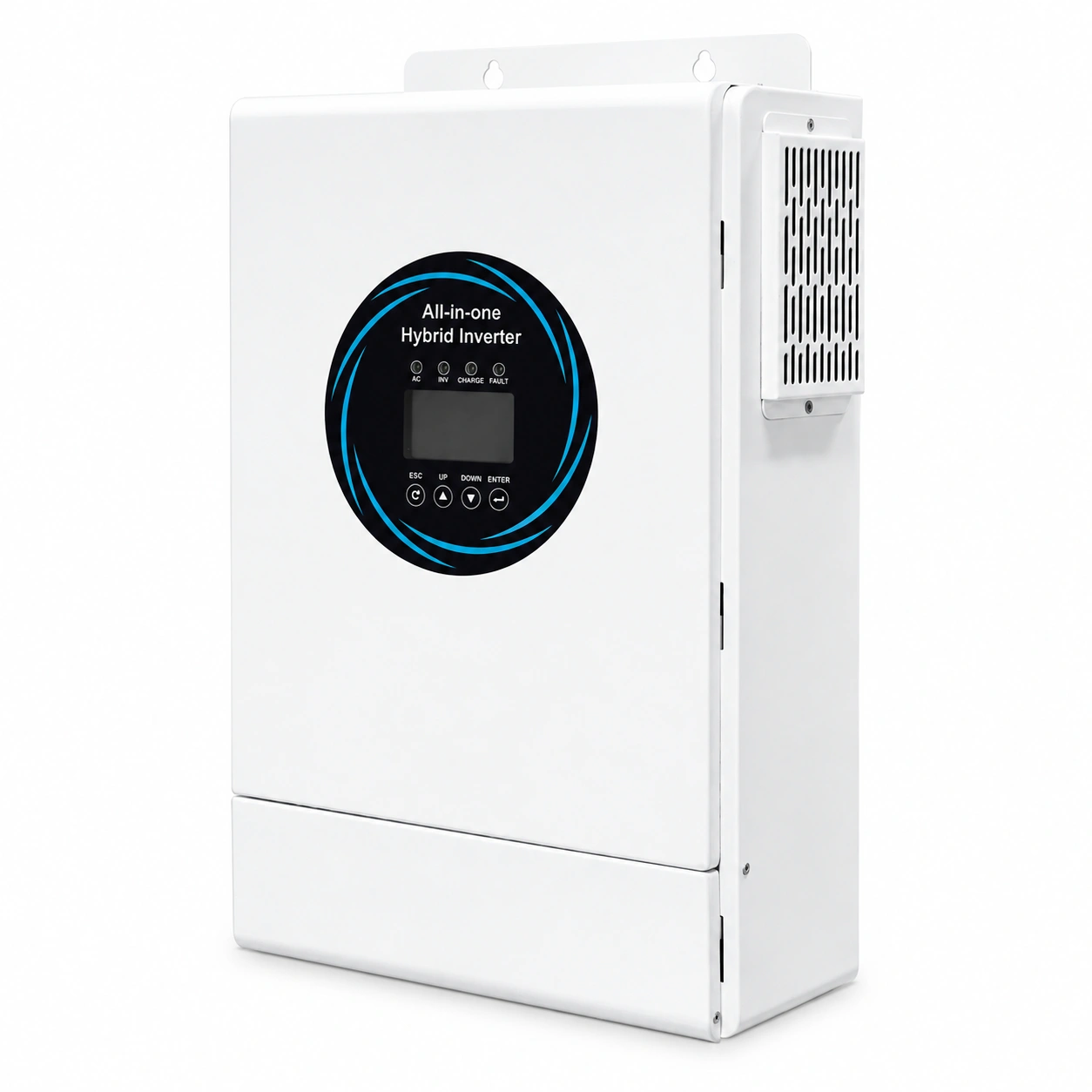
1. Integrated Hybrid Off-Grid Power System
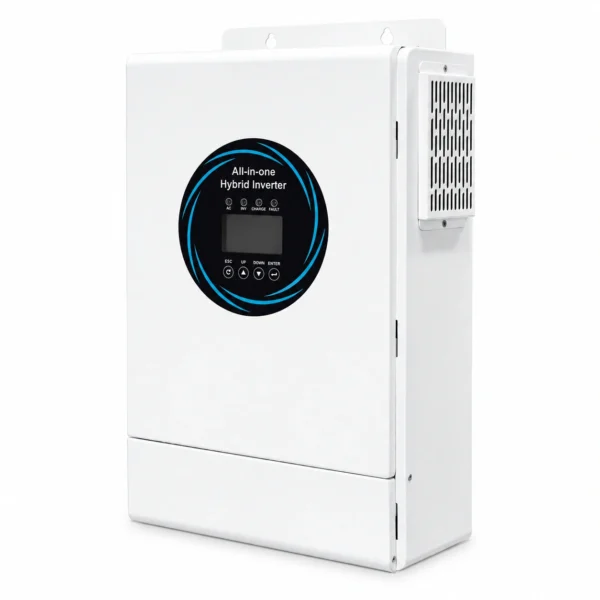
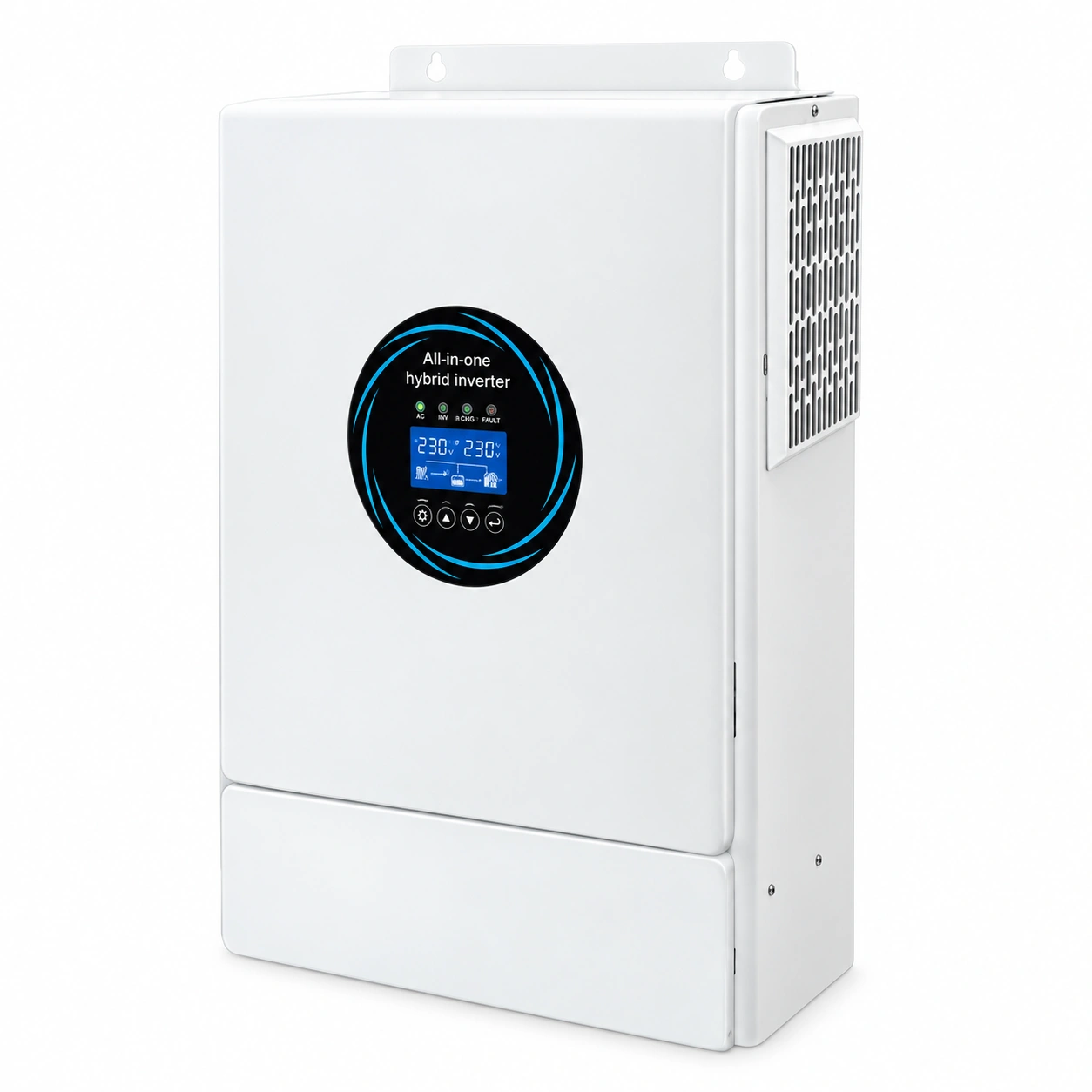
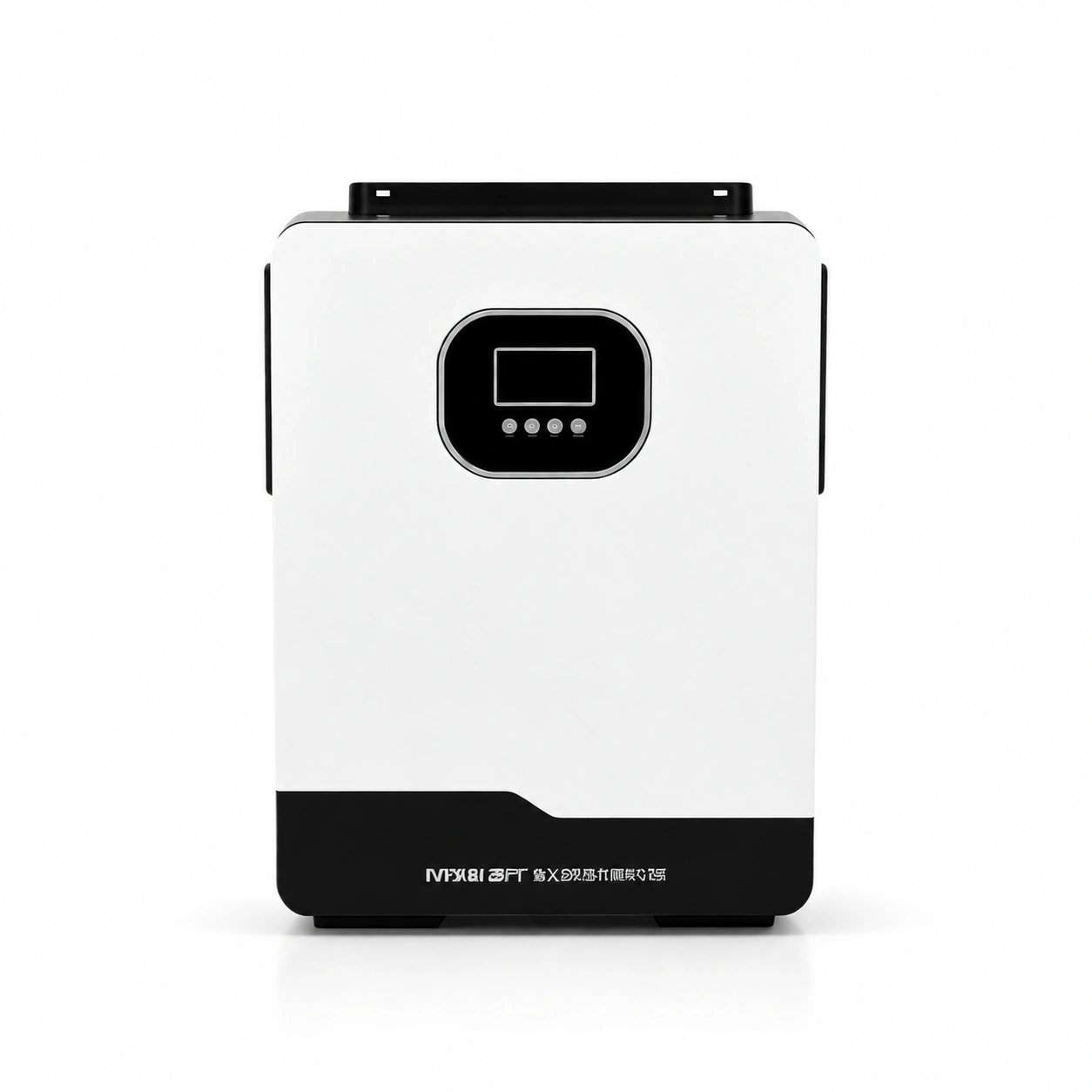
This 3.6 kW hybrid off-grid solar inverter charger combines pure sine wave power conversion, MPPT solar charging, utility charging and 48 V battery management in one wall-mounted unit. It is designed for residential backup, off-grid homes and small standalone energy systems using compatible photovoltaic arrays and 48 V battery banks.
The inverter provides two AC output circuits while maintaining a maximum combined AC output of 3.6 kW, allowing compatible loads to be organized across separate output groups without increasing the inverter’s total rated capacity.
2. 3.6 kW Pure Sine Wave Output
• 3.6 kW / 3.6 kVA Rated Power: Supplies compatible household appliances and electronic equipment within the inverter’s rated capacity.
• Dual AC Outputs: Provides two AC output circuits for organized load distribution.
• 3.6 kW Maximum Combined Output: The two outputs share the inverter’s total 3.6 kW capacity and must not be treated as two independent 3.6 kW supplies.
• 220/230 V AC Output: Provides selectable nominal AC output with ±5% voltage regulation.
• 50/60 Hz Operation: Supports compatible 50 Hz and 60 Hz electrical systems.
• Pure Sine Wave Supply: Suitable for compatible household appliances, computers and electronically controlled equipment.
• 3:1 Crest Factor: Supports compatible nonlinear and startup loads within the specified operating limits.
3. Configurable AC Input
• 230 V AC Rated Input: Designed for compatible single-phase 230 V AC sources.
• Computer Input Range: Supports a 170-280 V AC input range for sensitive electronic loads.
• Appliance Input Range: Supports a wider 90-280 V AC input range for compatible household appliances.
• Automatic Frequency Detection: Detects compatible 50 Hz or 60 Hz input automatically.
• Fast Transfer: Provides a stated transfer time of 10 ms for computer applications and 20 ms for household-appliance applications.
4. MPPT Solar Charging
• MPPT Charge Controller: Manages photovoltaic input and battery charging according to available solar power and configured limits.
• 40-450 V DC MPPT Range: Supports compatible high-voltage photovoltaic strings within the specified operating range.
• 500 V DC Maximum PV Open-Circuit Voltage: PV string voltage must remain below this limit under all temperature and operating conditions.
• 18 A Maximum PV Input Current: Defines the maximum current accepted from the connected photovoltaic array.
• 100 A Maximum Solar-Charging Current: Supports high-current charging of a compatible 48 V battery bank.
• 96% Peak PV-to-Inverter Efficiency: The supplier specifies peak conversion efficiency of 96% from photovoltaic input to inverter output.
5. 48 V Battery Management
• 48 V DC Battery Platform: Designed for a compatible 48 V battery bank.
• 220 A Maximum Battery Discharge Current: Supports high-current battery output within the specified system limits.
• 54 V DC Float-Charging Voltage: Provides the stated float-charge setting.
• 63 V DC Overcharge Protection: Protects the connected battery system against excessive charging voltage.
• CC/CV Charging: Uses constant-current and constant-voltage charging control.
• 100 A Maximum Utility-Charging Current: Supports battery charging from an approved AC source.
• 100 A Maximum Total Charging Current: The combined charging configuration must remain within the stated maximum charging-current limit.
6. Lithium Battery Support
• RS485 Lithium Battery Communication: Supports communication with compatible lithium battery management systems.
• Lithium Battery Activation: Supports activation of compatible lithium batteries from photovoltaic or utility power.
• BMS Compatibility: Battery communication protocol and BMS compatibility must be confirmed before ordering.
• Optional Wi-Fi: Wireless monitoring is available as an optional configuration.
7. Protection and Monitoring
• Overload Protection: The supplier specifies a 5-second response at loads of 140% or above and a 10-second response between 100% and 140% load.
• Power-Factor Compatibility: Supports compatible loads with a power factor from 0.6 to 1.0, including capacitive and inductive loads.
• LCD Display: Provides access to operating information and system settings.
• Communication Interfaces: Includes RS232, RS485 and dry-contact connections.
• IP21 Protection: Intended for protected indoor installation away from rain, condensation and excessive dust.
• Wide Operating Range: Specified for operation from -10°C to +55°C.
8. B2B System Applications
The inverter charger is suitable for solar-system integrators, residential backup-power suppliers, off-grid equipment distributors and battery-storage solution providers. Typical applications include homes, cabins, remote properties, small offices and other locations requiring combined solar, battery and utility power management.
PV array design, battery chemistry, BMS communication, AC input conditions, load startup requirements, cable size, external protective devices and installation environment must be confirmed before commissioning.